Attic Gas Water Heater Converted to Tankless Rinnai System
Most homes with an older tank water heater tucked away in the attic are just one bad day away from a real mess. A failing tank up there means potential water damage to your ceiling, insulation, and everything below it. Going tankless solves that problem and then some.
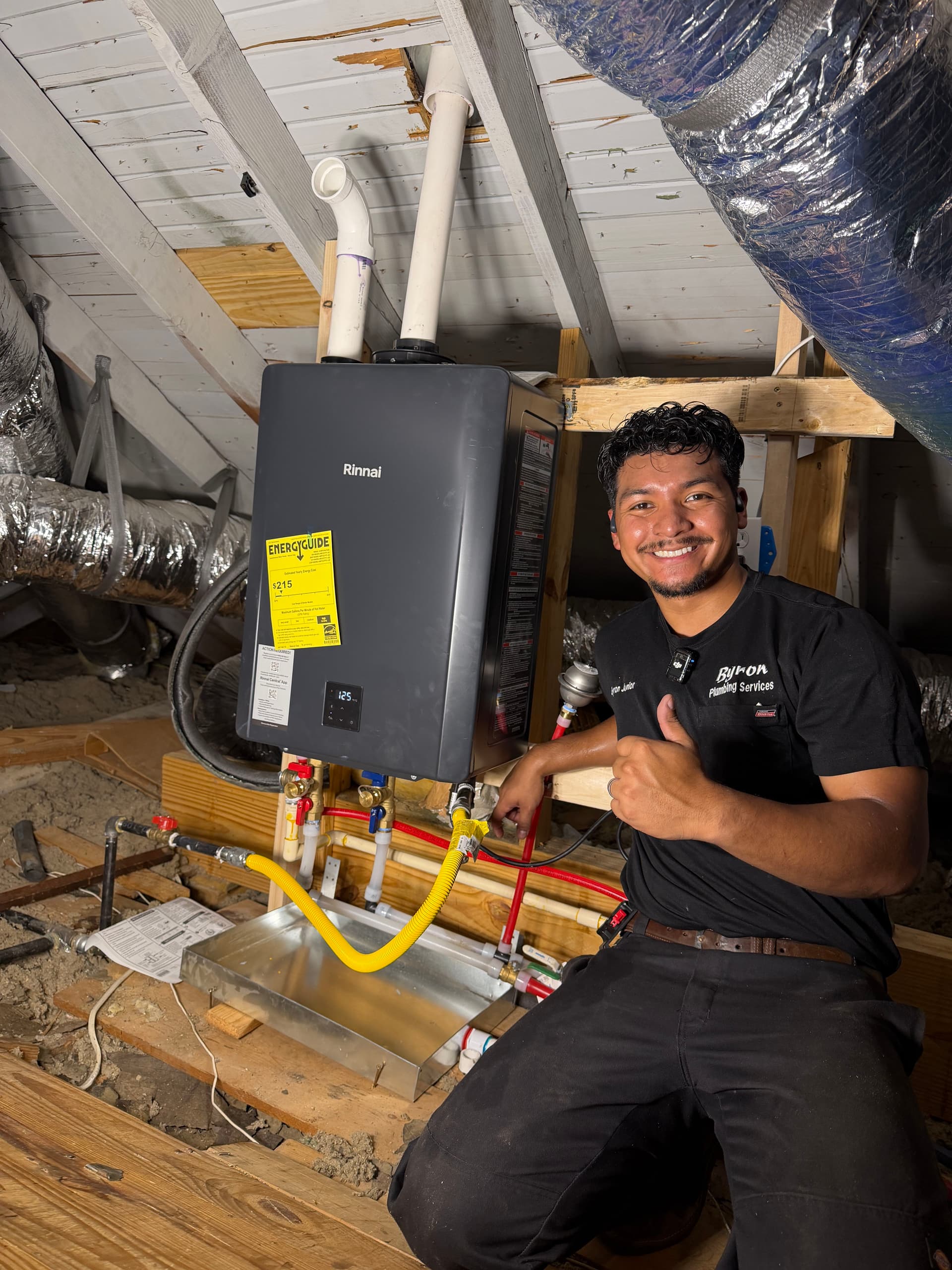
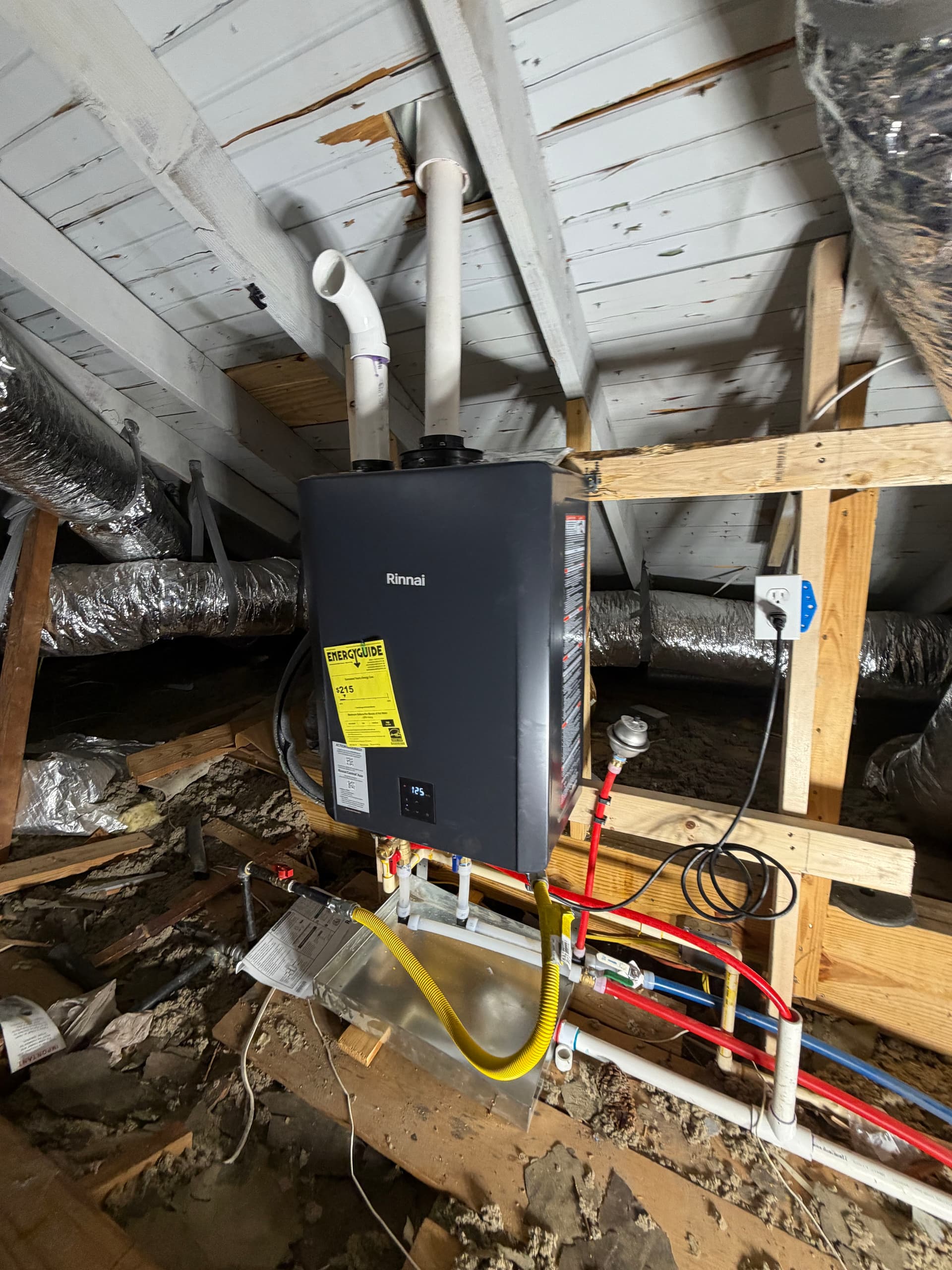
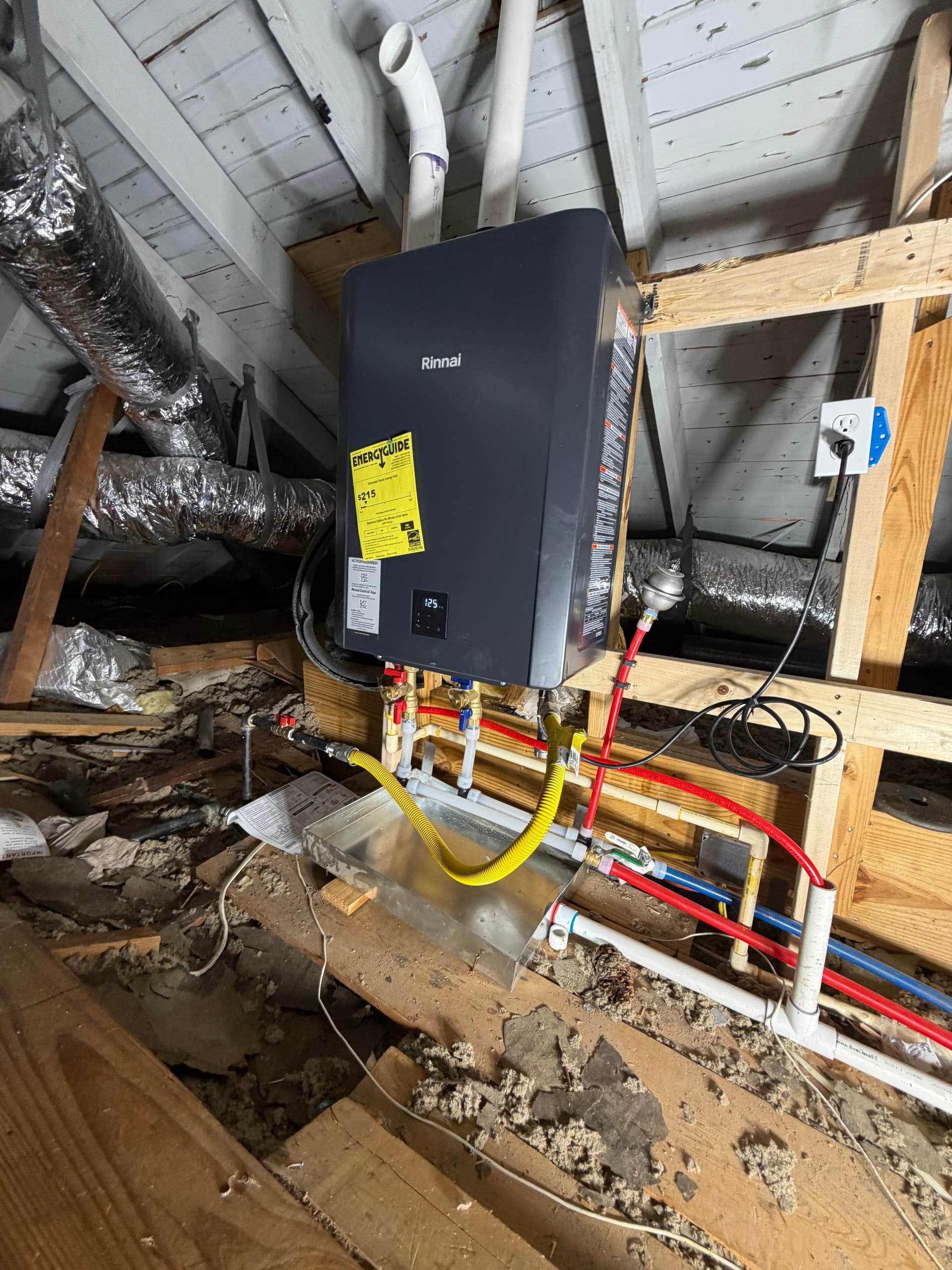
This was a full conversion - out with the old gas tank unit, in with a new Rinnai tankless system. We didn't just swap hardware. We reworked the water lines, properly sized the gas supply, ran fresh venting and intake, and built out a solid framing setup to mount everything securely. A safety pan went in underneath as well, which is a must-have for any attic installation.
Gas sizing is something that gets overlooked on a lot of tankless installs. If the line feeding the unit isn't sized correctly, the system can't fire at full capacity - meaning you end up with lukewarm water when demand is high. We make sure that's done right from the start, not as an afterthought.
The end result is a compact, wall-mounted unit that heats water on demand. No tank sitting there keeping 40 or 50 gallons warm around the clock. Just hot water when you need it, at the temp you set.
Tankless water heater installation is one of those jobs where the details really do matter. The unit is only as good as the installation behind it, and cutting corners on venting, gas lines, or support can create problems down the road. We take the time to do it right the first time.