Water Heater Leaking? Emergencies, Costs & Quick Steps
Water heater leaking? Learn what to do right away, when it’s a true emergency, and what really affects the cost to repair or replace it.
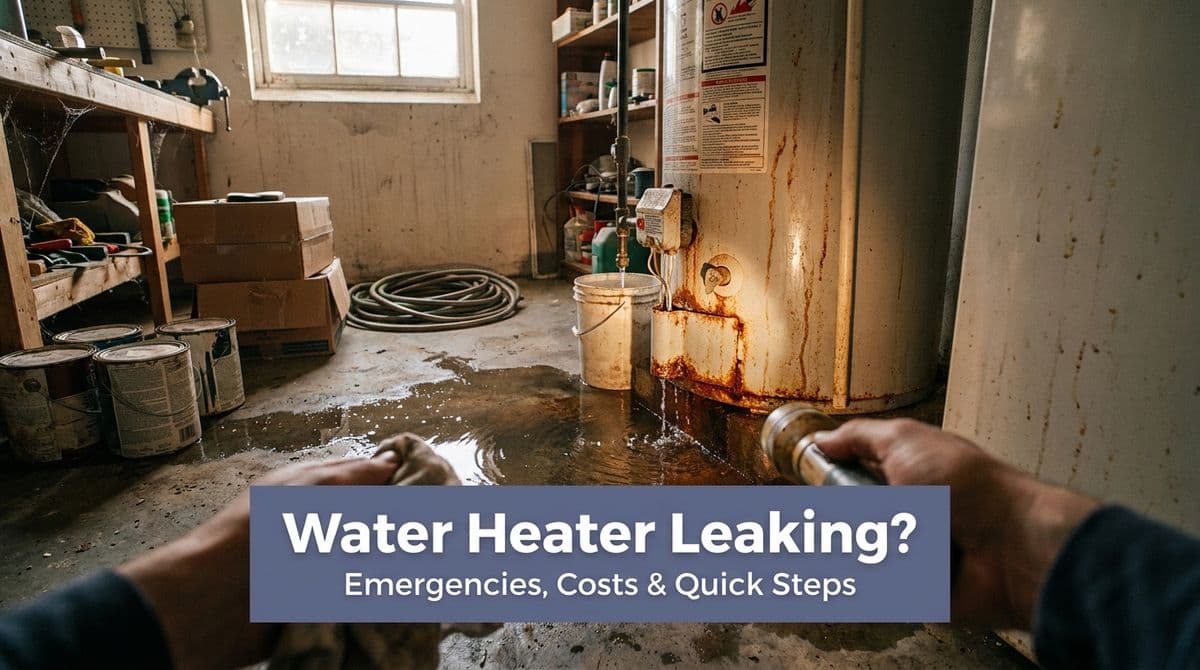
Water Heater Leaking: What We Tell Homeowners Right Away
We recently got a call from a homeowner — let’s call him Mark — early on a Saturday morning. He’d noticed a small puddle around his water heater and said, “It’s only a minor leak right now, but I want someone out as soon as possible. Also… what is this going to cost me?”
That’s a very familiar situation for us. Even a “minor” water heater leak can turn into a big problem if it’s ignored, but it doesn’t always mean you’re in full emergency mode. In this post, I’ll walk you through exactly what we walk customers like Mark through: what to do right away, when it’s an emergency, and what really affects the repair cost.
First Steps When You Spot a Water Heater Leak
If you see water around your heater, here are the first things we recommend before we even arrive:
- Stay calm and take a quick look – Is it a small drip, a thin trickle, or is water actively flowing?
- Protect nearby belongings – Move boxes, rugs, and anything that can soak up water.
- Grab a towel or pan – Wipe up the puddle and place a pan or tray where you see water coming from so you can tell how fast it’s leaking.
While you’re doing that, try to locate where the water is coming from (without removing any panels):
- From the top? Could be pipes, fittings, or the cold/hot connections.
- From the side? Often a valve or pipe joint.
- From the bottom? Might be the tank itself or the drain valve.
You don’t have to diagnose it perfectly, but anything you can tell us — like Mark saying, “It’s just a small puddle, no spraying” — helps us judge how urgent it is.
When a Leaking Water Heater Is a True Emergency
Not every leak needs a 2 a.m. emergency visit, but some definitely do. We consider it an emergency if you notice:
- Fast or worsening leak – Water is actively running, not just slowly dripping.
- Water near electrical equipment – Any chance it’s reaching outlets, extension cords, or other appliances.
- Ceiling or wall damage – For heaters in attics, closets, or upper floors where leaks can spread quickly.
- Signs of tank failure – Bulging tank, loud popping/banging, or rusted-through spots with steady water.
If any of that is happening, treat it as an emergency. Until we arrive, here’s what we usually walk homeowners through over the phone:
- Turn off the water supply – There’s usually a small shutoff valve on the cold-water pipe above the heater. Turn it clockwise to close.
- Shut off the power or gas
Electric: Flip the dedicated breaker for the water heater to OFF in your panel.
Gas: Turn the gas control knob on the heater to “Off” or “Pilot.” - Keep the area clear – Keep kids and pets away from the water and the heater.
If the leak is small and contained — like Mark’s — we usually schedule a same-day or next-available visit, but it doesn’t always need middle-of-the-night service.
Small Leak vs. Big Problem: How We Decide
On site, the first question we answer is: Is this a repair, or is the tank itself failing? A few quick rules of thumb:
- Good candidates for repair
– Loose pipe connections
– Leaking drain valve
– Faulty temperature and pressure (T&P) relief valve
– Minor fittings that need tightening or replacement - Likely replacement
– Water seeping from the tank body (especially if it’s older than 8–10 years)
– Heavy rust, corrosion, or bulging on the tank
– Repeated leaks after prior repairs
In Mark’s case, the leak was from a tired old drain valve at the bottom of the tank. We were able to shut the water off, replace the valve, test for more leaks, and have him back in hot water the same morning.
What Affects the Cost of Fixing a Leaking Water Heater
On the phone, Mark asked the same question most homeowners do: “Can you give me a ballpark?” We’re always honest that we need to see the heater before giving a real number, but here are the main things that drive cost up or down:
1. Type and Age of the Water Heater
Tank vs. tankless: Tank-style heaters are usually simpler and cheaper to repair. Tankless units tend to be more complex and parts can cost more.
Age matters: If the heater is near or past 10 years old and the tank is leaking, it rarely makes sense to pour money into repairs. We’ll usually talk honestly about replacement options at that point.
2. What Exactly Is Leaking
Lower-cost issues are usually things like a leaky drain valve, loose fittings, or a failing T&P valve. Those are often straightforward parts-and-labor jobs.
Higher-cost issues include internal tank leaks, major corrosion, or damage from previous improper repairs. In those cases, your money may be better spent on a new unit rather than patching the old one.
3. Location and Accessibility
A heater in an open garage or utility room is usually faster (and cheaper) to work on than one in a tight attic, crawlspace, or closet. Extra time for access, draining, or protecting finishes can add to labor cost.
4. Timing and Emergency Service
Just like with Mark’s Saturday call, time of day and urgency can affect cost. After-hours, late-night, or holiday emergencies often include additional fees, so if the leak is small and safe to contain, we may recommend waiting until regular hours to save you money.
How Homeowners Can Help Keep Costs Down
You can’t prevent every leak, but there are a few simple habits that help:
- Check around the heater monthly for dampness, rust, or unusual noises.
- Keep the area clear so we can access the unit quickly and safely.
- Don’t ignore “minor” leaks — call when you first notice moisture, not months later.
- Schedule periodic maintenance like flushing sediment (where appropriate) and testing the T&P valve.
Noticed a Leak? Here’s Our Usual Advice
If you spot a leak today, do what we walked through with Mark: protect the area, try to shut off water and power if needed, and then call a licensed plumber. We’ll help you decide if it’s an emergency, give you an idea of what to expect, and then provide a clear written estimate once we’ve inspected the heater.
A small puddle doesn’t have to turn into a big headache — as long as you act quickly and get a professional set of eyes on the problem.