Why We Upgrade Old Shutoff Valves to Quarter-Turn
Old multi-turn shutoff valves often seize in hard water. We explain why upgrading to quarter-turn valves makes your home safer, easier to maintain, and more reliable.
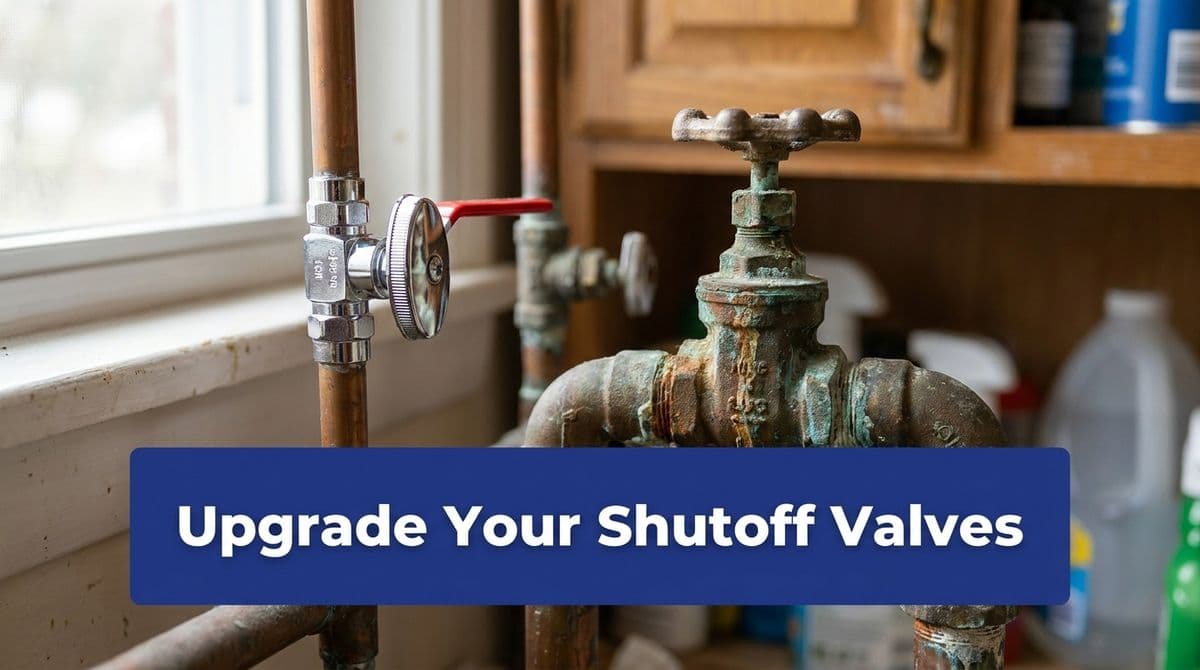
We recently got a call from a homeowner — let’s call him Tom — who had just moved into a house in a 55+ community. Tom told us, “Most of our shutoff valves are those old silver ones you have to spin like eight times… and most of them are frozen. We want quarter‑turn valves on everything.”
As we talked, he mentioned something else we hear a lot in our area: “There’s a heck of a lot of calcium in this water out here, isn’t there?” He was exactly right — and that hard water is a big reason those old multi‑turn valves seize up.
Calls like Tom’s are why we so often recommend upgrading old multi‑turn shutoff valves to modern quarter‑turn valves, especially in homes with hard water. In this post, we’ll walk you through how we look at these valves in the field and what we suggest to our customers.
Multi-Turn vs. Quarter-Turn Shutoff Valves: How We Compare Them
When we walk into a home like Tom’s, we usually see two main styles of shutoff valves under sinks and at toilets:
Multi-turn (old-style) shutoff valves
These are the “old school silver ones” Tom described — you twist the handle several times to shut the water off. Inside, there’s usually a rubber washer riding on a screw stem.
- More moving parts: Threads, stem, and washer all wear out over time.
- Prone to seizing: Mineral buildup and corrosion make them stiff or frozen.
- Easy to overtighten: Homeowners crank harder, which can snap stems or start leaks.
Quarter-turn (ball-type) shutoff valves
These are the newer style we like to install. The handle only turns 90 degrees — in line with the pipe is on, perpendicular is off.
- Simple internal design: A rotating ball with a hole through it does the work.
- Fast operation: A quick quarter-turn shuts water off in an emergency.
- More reliable over time: Fewer parts to stick, especially in hard water areas.
When we explain this at the kitchen sink with a customer, the reaction is almost always the same: “Why didn’t they just put these in to begin with?”
How Hard Water Wrecks Old Shutoff Valves
In neighborhoods like Tom’s, we routinely see heavy calcium and mineral content in the water. Over several years, here’s what we see happening inside those old multi‑turn valves:
- Mineral crust on threads: The screw stem gets coated in calcium, so the handle feels gritty and tight.
- Washer deterioration: Hard water slowly chews up rubber washers, leading to leaks when you operate the valve.
- Corrosion inside the body: Especially on older galvanized or mixed-metal plumbing, rust and buildup can lock the valve in place.
By the time a homeowner like Tom tries to turn a stuck valve, it sometimes hasn’t moved in 5–10 years. That’s when we see stems snap, valves start dripping, or, in the worst cases, the valve fail right when you need it most — during a leak.
Why We Recommend Upgrading to Quarter-Turn Valves
When we upgrade a home like Tom’s, we’re not just swapping shiny parts — we’re planning for the next 10–20 years. Here are the benefits we walk through with our customers:
- Quick shutoff in an emergency: You (or a neighbor, or your kids) can kill water to a toilet or faucet with one easy motion.
- Much easier to operate: Great for anyone with limited grip strength or arthritis.
- Better performance in hard water: Quarter‑turn ball valves handle mineral buildup far better than old screw‑type valves.
- Cleaner look and consistent hardware: Everything under sinks and at toilets matches and works the same way.
- Fewer surprise leaks when you use them: We see far fewer “I touched it and now it’s leaking” calls with newer quarter‑turn valves.
In Tom’s case, he had about 18 shutoffs plus a couple of hose bibs. That’s pretty typical for a modern home. We usually recommend doing them as a whole‑house upgrade so everything is the same age and style.
What We Check Before Replacing Your Valves
On the phone, we always ask a version of the question we asked Tom: “Do you know what type of pipe you have?” The answer affects how we prepare for your job.
Common pipe types we see
- Copper: Copper-colored pipe; we often sweat on new valves or use proper compression fittings.
- PEX: Usually red, blue, or white flexible tubing; we match the right fittings and tools to your brand of PEX.
- Galvanized/steel: Gray or silver threaded pipe; we have to be extra careful, as threads can be brittle and corroded.
We’ll often have customers text us a quick photo under a sink so we can identify the material before we arrive. That lets us stock the truck correctly and avoid multiple trips.
DIY or Call a Pro? How We Look at It
DIY risks we see all the time
- Old valves breaking off in the wall when someone tries to muscle them loose.
- Wrong type of valve or fitting for the pipe material, leading to slow leaks you don’t notice right away.
- Incomplete shutoff of the main water, so you get a surprise spray halfway through the job.
- Damage to PEX or copper from over‑tightening or using the wrong tools.
When we recommend calling us
If your valves are already stiff, if you know you have hard water, or if the home is 10+ years old like Tom’s, we usually advise letting a licensed plumber handle the upgrade. Here’s what we do on a typical visit:
- Verify the main water shutoff works properly before we start.
- Identify each pipe type and choose the right replacement valves and fittings.
- Replace the shutoffs cleanly and test every connection under pressure.
- Check nearby fixtures (like Tom’s tight shower handle or a toilet that isn’t filling right) while we’re there.
That way, you end up with reliable shutoffs throughout the house and peace of mind the next time you need to use them.
Thinking About Upgrading Your Shutoff Valves?
If you’ve tried to turn a valve and it won’t budge, or you know your home has hard water and older multi‑turn shutoffs, it may be time for an upgrade. Our team helps homeowners like Tom every week with whole‑house valve replacements, from under‑sink shutoffs to hose bibs.
Whether you just moved in or you’ve been in your home for years, we’re happy to take a look, identify your pipe types, and give you straightforward options for switching to quarter‑turn valves that will actually work when you need them.